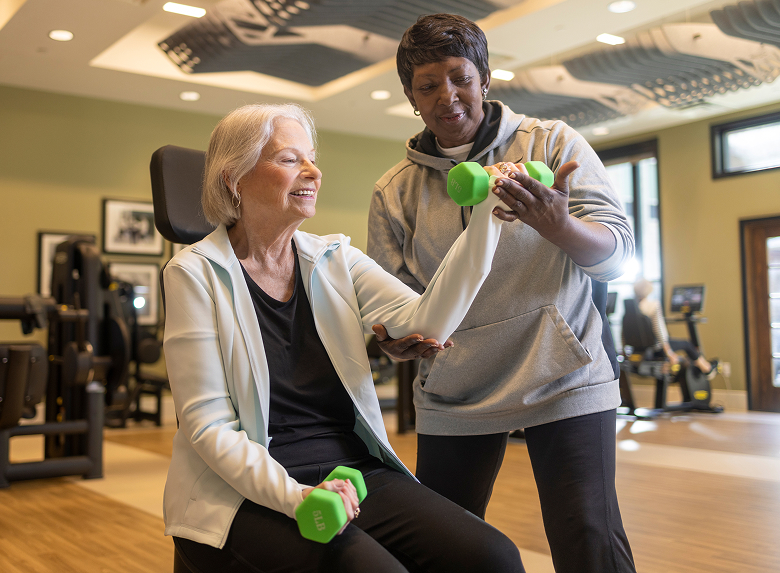
Whether it’s a surgery, injury or illness that you are looking to rebound from, our Outpatient rehab team is there to get you back on your feet. When it comes to senior rehabilitation services inFort Worth, residents at Stevenson Oaks can receiveoutpatient rehabilitationservices without leaving the community. When it’s time to get stronger, you’ve got everything you need, right there at Stevenson Oaks.
WHAT KIND OF THERAPY IS AVAILABLE?
Outpatient Rehabilitationgets between whatever went wrong and your return to full speed. Here is what you need to know:
Maintaining independence by supporting the skills needed for safe, confident participation in everyday activities.
Recovering your spoken communication, eating and swallowing skills for greater confidence and connection in daily life.
Fortifying your strength, balance and mobility, promoting greater independence and ease of movement throughout each day.
Rehab teams start with the resident and include a doctor, nurse, dietitian, social worker, family members (as the resident is able and willing to approve), plus the therapists who will direct and provide care, partner with the resident and work with the family members.
Occupational and physical therapy work to restore strength and mobility, but occupational therapy focuses more on helping adapt to the resident’s social and physical environment. This typically includes training or retraining the resident on how to dress, bathe, eat and groom; memory, orientation and cognitive integration; and on maintaining normal joint movement to reduce the effects of arthritis or other conditions.
After accident, injury or surgery, 2 major concerns that sometimes emerge are eating challenges and swallowing dysfunction, the former caused or exacerbated by poor teeth or dentures, the latter by post-intubation trauma. Our skilled speech and language pathologists create treatment plans that address each resident’s specific abilities, provide precise exercises and other tactics and when appropriate, offer diet recommendations in support of the treatment plan medical recommendations. A third concern – constrained vocalizing – may follow events such as strokes or accidents. In that case, the speech therapist will develop strategies for relearning vocalization.